Best Sausage Packaging Machine for Your Business Needs?
In the competitive world of food production, a reliable sausage packaging machine is essential for business success. The right equipment not only enhances efficiency but also ensures product quality. This article explores various options available.
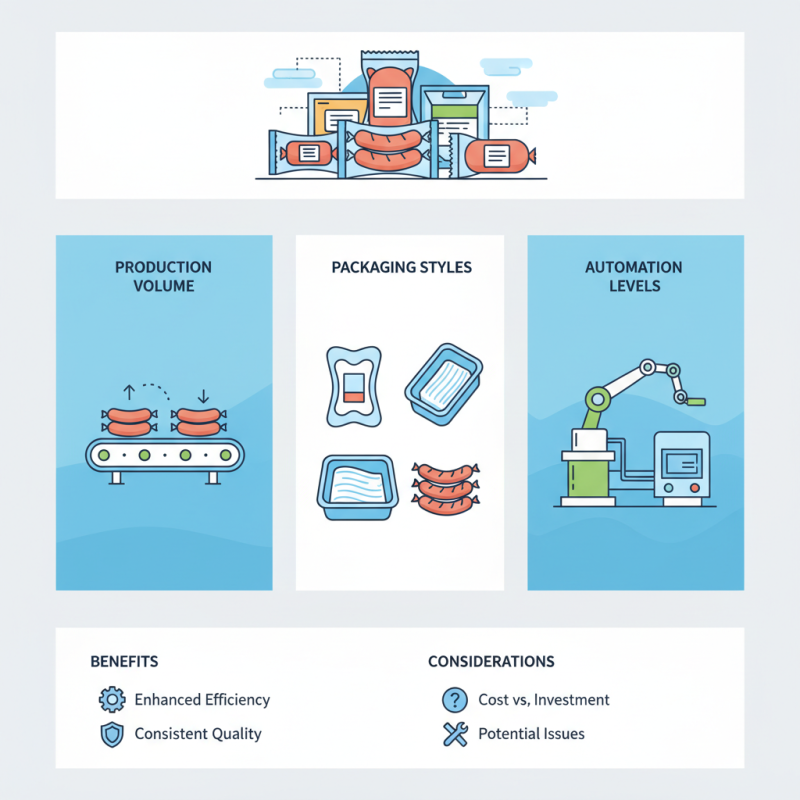
Choosing a sausage packaging machine involves careful consideration. Each model offers unique features tailored to different business needs. Factors such as production volume, packaging styles, and automation levels significantly impact your choice. Many businesses overlook the importance of these elements, leading to inefficiencies.
Additionally, a trustworthy machine can reduce operational costs. However, selecting the wrong model may lead to unexpected issues. It's crucial to weigh the pros and cons of each option. This exploration aims to guide you in making an informed decision that benefits your sausage production line.
Types of Sausage Packaging Machines Available in the Market
When selecting a sausage packaging machine, understanding the types available is crucial. Various options cater specifically to different business requirements. Common types include vacuum sealers, flow wrappers, and bagging machines. According to industry reports, vacuum sealers are highly regarded for their ability to extend shelf life through airtight sealing. This can reduce spoilage and loss, which is essential in meat processing.
Flow wrappers are popular for high-volume operations. They efficiently wrap sausage products in a continuous flow, enhancing productivity. Many businesses appreciate their speed and consistency. This type of machine can handle different sizes and shapes, adapting to various product lines. Reports suggest that integrating flow wrappers can increase output by up to 40% compared to manual packaging methods.
Bagging machines offer versatility for bulk packaging needs. They can efficiently fill and seal both large and small packages. However, the initial setup and calibration can be challenging. Businesses must invest time in training staff to maximize machine efficiency. Some operators find it tricky to maintain consistency in sealing, which could lead to product spoilage. Balancing speed with quality remains a crucial consideration for many companies in the sausage production industry.
Key Features to Consider When Selecting a Sausage Packaging Machine
When selecting a sausage packaging machine, focus on key features that align with your business needs. Speed is crucial. A machine that can package at least 60-80 units per minute can significantly enhance productivity. Efficiency saves time and labor costs, which directly impacts profitability. According to industry reports, investing in high-speed packaging solutions can improve output by up to 30%.
Consider the type of packaging. Vacuum sealing is popular for maintaining freshness. Machines that offer customizable bag sizes cater to diverse product ranges effectively. Additionally, look for machines that are easy to clean and maintain. In 2022, a survey showed that 50% of businesses prioritized hygiene when selecting packaging equipment.
Tips: Check for user-friendly interfaces. Operators need to adapt quickly to machine functions. Automatic adjustments for product size can reduce errors during packaging.
Moreover, reliability is paramount. Choose machines with proven track records to minimize downtime. Almost 20% of issues in the packaging sector arise from equipment failure. Regular maintenance and support can further enhance reliability. Investing in a quality machine will pay off in the long run, though upfront costs might be higher. Analyze your choices carefully.
Evaluating Production Capacity and Efficiency for Your Business Needs
When choosing a sausage packaging machine, production capacity is crucial. Assess how many units you need to produce daily to meet market demands. A machine that operates efficiently can streamline your workflow. However, it is vital to balance speed with quality. High-speed machines may compromise the integrity of each sausage.
Tips: Always request samples of the machine's output. Check for consistency in size and sealing.
Next, consider the efficiency of the packaging process. Look for machines that minimize waste and maximize output. Some models offer automation features that reduce manual handling. This can cut labor costs significantly. Nonetheless, automation may require a learning curve for your team.
Tips: Invest in training for your staff. Proper training can optimize the new equipment's potential.
Cost Considerations and Budgeting for Sausage Packaging Equipment
When considering sausage packaging equipment, cost factors are crucial. Your budget will determine the type and quality of machine you choose. This equipment can vary widely in price. Some machines may offer advanced features that save time and labor costs. However, they usually come with higher price tags.
Investing in used or refurbished machinery is an option. It can significantly reduce your initial expenses. Yet, be cautious with equipment history. Inspect its condition and ensure reliability. A cheap machine may lead to higher maintenance costs.
Additionally, evaluate the operational costs, such as energy consumption and material usage.
Understand the total cost of ownership, not just the purchase price. This includes training staff and potential downtime. Budgeting must account for ongoing expenses too. Watch for hidden costs that can quickly add up. Balancing upfront investment and long-term benefits can be challenging. Thoughtful planning is essential for effective decision-making.
Maintenance and Support Options for Sausage Packaging Machines
When investing in a sausage packaging machine, maintenance and support are critical factors. According to recent industry reports, regular maintenance can extend the life of machinery by up to 30%. This indicates the importance of choosing a machine that comes with robust support options. Understanding maintenance needs helps in minimizing downtime and maximizing productivity.
Routine checks and services can prevent minor issues from becoming major repairs. Many manufacturers recommend service contracts that include annual inspections. These contracts often provide priority support, which can be invaluable in a fast-paced business environment. Regular training for staff members on proper operation can also reduce wear and tear on the equipment. Investing in proper training and support options can save businesses substantial amounts in the long run.
Technology is evolving, and newer machines often come equipped with diagnostic features. These features assist in early detection of problems, allowing for proactive maintenance. While advanced systems may come with higher upfront costs, their long-term reliability makes them worth considering. Ensuring a good balance of support and maintenance can be a challenging journey. Identifying the right resources for assistance can help businesses navigate these complexities effectively.