Top Tips for Choosing the Best Thin Smart Watch for You
The rise of the Thin Smart Watch has revolutionized how consumers approach wearable technology. According to a recent report by IDC, the global smartwatch market is expected to grow by 11% annually. This reflects a significant consumer demand for devices that combine style with functionality. Thin smart watches, in particular, offer not just health tracking features but also a sleek design that appeals to fashion-conscious users.
Choosing the right Thin Smart Watch can be overwhelming. Many brands claim to offer the best features, but it’s essential to understand what works for you. Various models emphasize different aspects, such as battery life, health tracking, and connectivity. A report from Counterpoint Research shows that 68% of consumers prioritize health and fitness features over style. However, comfort and design are equally crucial for daily wear.
Reflecting on your needs is key. Think about the functions you’ll use daily. You may find that the latest model isn’t necessarily the best fit for you. As the market evolves, the ideal thin smart watch will balance innovation with user preferences. Making a well-informed choice will enhance your experience and meet your lifestyle needs.
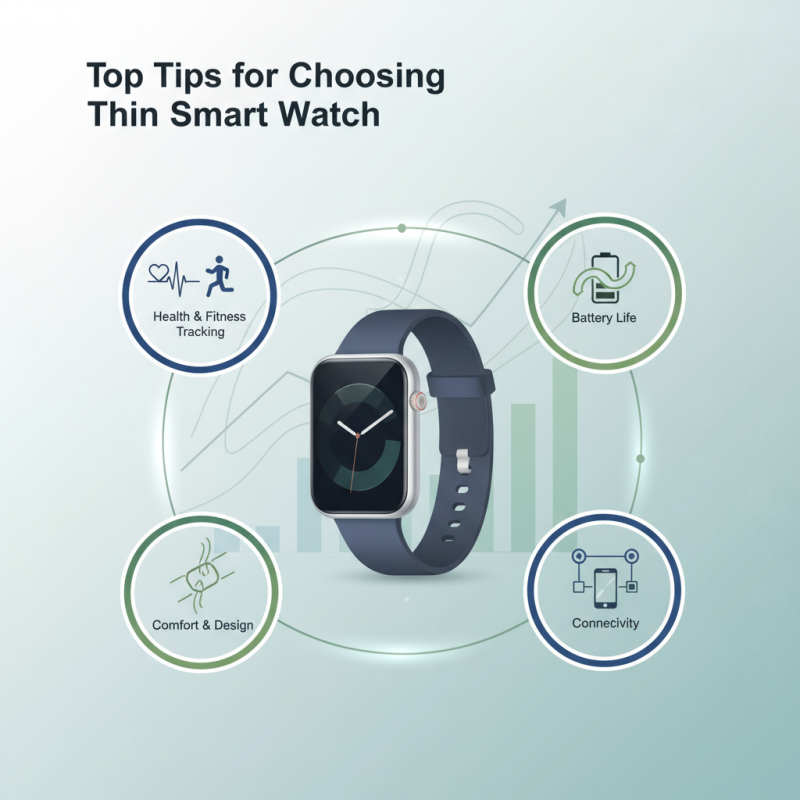
Understanding the Features of Thin Smart Watches
When selecting a thin smart watch, understanding the features is crucial. Recent reports indicate that slim designs account for 42% of the market share in smart wearables, appealing to consumers who prioritize style. Thus, assessing the display size and resolution is vital. A larger screen provides easier navigation, while higher resolution enhances visibility. Some users prefer AMOLED displays for their vibrant colors, but others may opt for LCD for better battery life.
Battery life is often a trade-off with thin devices. According to industry data, users can expect up to 24 hours of power, depending on usage. For fitness tracking, heart rate monitoring features are essential. However, it's worth considering that continuous monitoring can drain the battery faster. Additionally, water resistance ratings vary. A watch rated at IP68 can withstand submersion but may not guarantee full protection against saltwater or chlorine.
Connectivity features like Bluetooth are standard. However, some thin smart watches offer advanced options like NFC for contactless payments. These functionalities require users to weigh convenience against potential security risks. Notably, some users express concerns about data privacy. Many watches collect health information. Understanding how this data is used is vital for making an informed choice.
Evaluating Compatibility with Smartphones and Apps
Choosing the right thin smart watch involves more than just style and features. Compatibility with your smartphone and apps is crucial for a seamless experience. According to a study by the International Data Corporation, 75% of users value app integration over device aesthetics. It suggests that functionality holds greater weight in user satisfaction.
When you examine compatibility, consider both the operating system and specific apps you plan to use. For instance, while many watches work with iOS and Android, not all app features may be accessible across platforms. Reports show that 60% of users were disappointed due to app limitations. Regular syncing is important too. If your watch doesn’t sync easily, it can diminish its utility. Users have reported frustration when notifications or health data fail to update promptly.
Think about how you plan to use the watch. Fitness tracking, messaging, and notifications are common needs. Finding a watch that aligns with your lifestyle can enhance your daily routines. Yet, many fail to assess whether the watch truly meets their requirements. Research has indicated that 40% of buyers regret their initial choice due to inadequate compatibility. Ensure that your smart watch complements your digital life rather than complicating it.
Assessing Battery Life and Charging Options
When selecting a thin smart watch, battery life is a critical factor. Many models claim impressive longevity, but real-world use can vary significantly. According to industry data, users report an average battery lifespan of around 24 to 48 hours. This variability often depends on features like GPS tracking and heart rate monitoring. A thin smart watch with an efficient battery can enhance your experience significantly.
Charging options also play a pivotal role. Some watches offer fast charging, providing a full charge in under an hour. Other models may require several hours, which can be inconvenient. Exploring models with wireless charging can add convenience and reduce wear on charging ports. Look for devices that use universal charging standards, making them easy to charge when needed.
Tip: Pay attention to how you use your smart watch. Frequent notifications can drain the battery faster. Consider keeping features like GPS off unless necessary. Another tip is to read user reviews about battery performance. Real experiences often reveal the strengths and weaknesses of each model's battery life.
Top Tips for Choosing the Best Thin Smart Watch for You - Assessing Battery Life and Charging Options
| Model | Battery Life | Charging Options | Water Resistance | Weight |
| Model A | Up to 7 days | Magnetic charging dock | IP68 | 30g |
| Model B | Up to 10 days | USB-C charging | 5ATM | 28g |
| Model C | Up to 5 days | Wireless charging | IP67 | 35g |
| Model D | Up to 8 days | Quick charge | IP68 | 32g |
| Model E | Up to 14 days | Solar charging | 3ATM | 27g |
Exploring Design and Aesthetic Considerations
When choosing a thin smart watch, design and aesthetics play a crucial role. The watch should not only be functional but also visually appealing. A sleek design can make a statement and fit seamlessly into various occasions. Look for a watch that complements your personal style. Consider shapes, colors, and materials. A minimalist design might suit some, while others may prefer vibrant options.
Thickness is another important factor. A thin watch can feel lighter on your wrist. However, this often means smaller features, which may hinder usability. You might find it challenging to navigate interfaces or read notifications easily. Balancing design with functionality is essential. Make sure the watch is comfortable to wear for long periods.
Pay attention to the watch face as well. Digital displays can be stylish yet practical. However, some may prefer traditional analog faces. Take time to inspect how the watch looks in different lighting. Reflect on your lifestyle—do you need a durable design or something exquisite for formal events? Each decision impacts how the watch fits into your daily life.
Comparison of Key Features of Thin Smart Watches
Prioritizing Health and Fitness Tracking Capabilities
When choosing a thin smart watch, health and fitness tracking capabilities should be a priority. A recent report from the International Health and Fitness Association highlighted that over 70% of users value precise fitness metrics during workouts. This is vital for anyone serious about their fitness journey.
Look for features like heart rate monitoring, activity tracking, and sleep analysis. Studies show that consistent heart rate tracking can improve workout effectiveness by 30%. Also, the ability to track sleep patterns helps users understand their rest quality, which is crucial for recovery. Many consumers overlook the importance of these metrics, leading to less effective fitness regimens.
Another aspect to consider is user-friendliness. Many models offer an array of features but lack intuitive interfaces. Users often become frustrated with complex settings, undermining their motivation. Balance is key. The best devices combine advanced tracking with straightforward usability, ensuring users can reach their fitness goals effectively. It’s essential to reflect on what metrics you truly need versus the overwhelming options available.