Top Tips for Choosing Medical Grade Monitors for Your Needs?
Choosing the right Medical Grade Monitors is a critical decision for healthcare professionals. These monitors ensure accurate patient data and enhance diagnosis. The market is filled with options, making the selection process overwhelming.
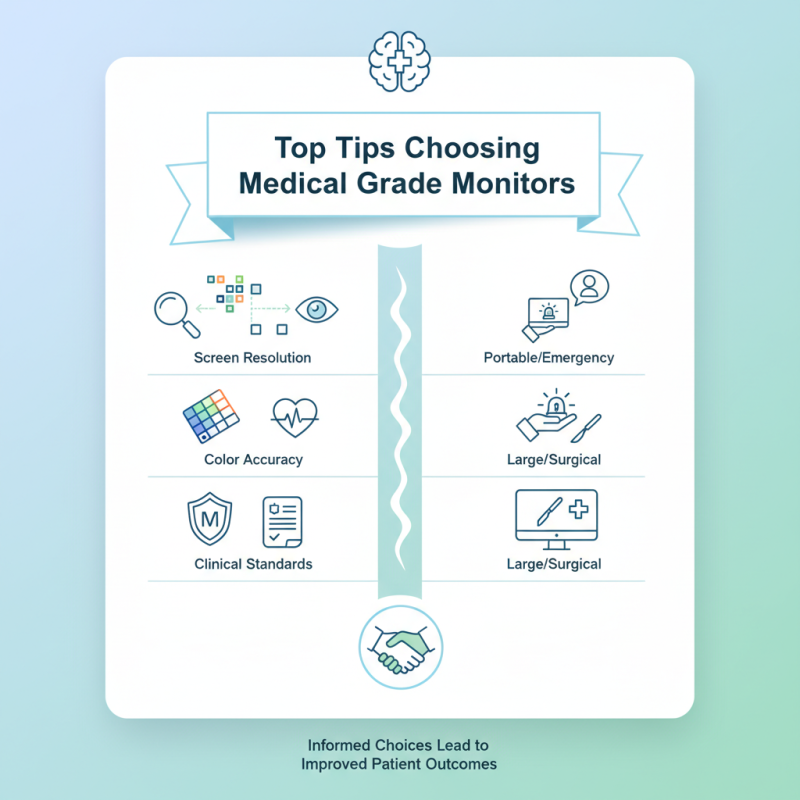
When selecting Medical Grade Monitors, consider several key factors. Think about screen resolution, color accuracy, and clinical standards. A high-resolution display offers clearer images. Accuracy in color representation affects interpretation of vital information. The industry sets guidelines, but not all monitors meet these standards adequately.
Furthermore, it’s important to evaluate your specific needs. Some users may require portable monitors for emergency situations. Others might need larger displays for surgical settings. Reflect on your environment and functionality preferences. After considering all these aspects, you'll be better equipped to make informed choices. Remember, the right monitor can significantly impact patient outcomes.
Understanding Medical Grade Monitors: Key Features to Consider
When selecting medical grade monitors, understanding the key features is vital. These devices differ significantly from standard monitors. They ensure accurate reproduction of images essential for diagnosis. The resolution is a critical factor. Most medical monitors offer resolutions of 2MP to 8MP. Higher resolutions provide clearer images. This means better detection of anomalies.
Color accuracy is another essential aspect. Monitors should support DICOM grayscale calibration. This allows precise shades of gray, critical for radiology. A report by the Radiological Society of North America highlights that over 30% of diagnostic errors arise from improper image display. An accurate and reliable monitor can mitigate such risks.
Response time and viewing angles are also crucial. Many medical applications require fast refresh rates. Lag can lead to misinterpretation of data. A standard refresh rate of 60Hz is commonly recommended. Display uniformity is often overlooked, but inconsistency can create challenges. High-quality monitors should provide even brightness across the screen. This is vital for consistent image quality. Many facilities face budget constraints, making it challenging to choose the right equipment. Prioritizing these key features can ultimately enhance patient outcomes.
The Importance of Compliance: Meeting Regulatory Standards
When choosing medical grade monitors, compliance is crucial. These monitors must meet specific regulatory standards to ensure safety and accuracy. Hospitals and clinics rely on these devices for patient care. Non-compliance can lead to serious consequences. Monitoring patient vitals must be precise. Any error can impact medical decisions.
Regulatory bodies set clear guidelines. These guidelines evolve over time. Staying updated is essential. A monitor that complies today may not meet future standards. Evaluating current specifications is necessary. It might seem overwhelming, but proper research pays off. Even minor deviations can lead to significant issues.
It's important to consider how well the monitor integrates into your workflow. Compatibility can vary, impacting usability. Choose a monitor that works seamlessly with your existing systems. Ask for feedback from colleagues who have experience with the devices. Learning from their successes and mistakes can guide your choice. Always question if the selected monitor truly fulfills the needs of your practice.
Evaluating Display Quality: Resolution, Brightness, and Contrast Ratio
When selecting medical grade monitors, display quality is vital. Resolution, brightness, and contrast ratio play crucial roles in accurate diagnosis. A higher resolution means clearer images. This clarity can be critical during medical evaluations.
Brightness is another key factor. A monitor with insufficient brightness may obscure details. This can lead to misinterpretation. Ideally, a balance between brightness and contrast ratio is needed. A good contrast ratio enhances differences between light and dark areas. This makes images more discernible.
However, it’s essential to remember that specifications alone don’t define quality. Monitors with high specs can still perform poorly in real-world conditions. Environmental factors, like lighting, can affect visibility. Regular assessment of monitor performance is crucial. Users should test their equipment under various conditions. This ensures it meets the practical requirements of medical settings.
Evaluating Display Quality: Monitor Metrics Comparison
This chart illustrates the various quality metrics of medical grade monitors including resolution, brightness, and contrast ratio. Each category is scored based on typical performance standards to help assess which monitor might best fit your medical needs.
Ergonomics and Usability: Design Aspects for Healthcare Settings
In healthcare settings, ergonomics and usability are crucial for medical grade monitors. The right design greatly impacts efficiency and user satisfaction. A study published by the Institute of Medicine highlights that poor ergonomics can lead to increased fatigue and errors among healthcare providers. This data suggests that careful selection of monitor features is vital.
When choosing a monitor, consider adjustable height and angle settings. These features allow healthcare professionals to customize their workspace, reducing strain and discomfort during long shifts. User feedback suggests that intuitive interfaces can enhance workflow. Complex systems may cause frustration, leading to mistakes in patient care.
Another important aspect is screen size and resolution. A report from the American Medical Association indicates that larger screens help in visual clarity, especially when analyzing medical images. However, larger monitors can consume more desk space, which may not be feasible in smaller clinics. Balancing size and functionality is essential.
Evaluate the specific needs of your team. Some staff may prefer larger displays, while others might need portable options. Understanding diverse user preferences ensures that all caregivers can work effectively without compromise. Always revisit your choices; continuous improvement in ergonomics is key.
Budgeting for Medical Equipment: Cost vs. Value Analysis
When budgeting for medical equipment, it’s essential to weigh cost against value. High-quality monitors often come at a higher price, but they can significantly impact patient outcomes. A more expensive monitor may provide better accuracy and reliability, saving money in the long run. However, not every facility has the budget for top-tier options. Finding a balance can be challenging.
Consider the specific needs of your practice. Assess the types of procedures you'll perform and the patients you'll serve. An expensive monitor might be overkill if your requirements are modest. It's also important to remember maintenance costs. Cheaper options might not be cost-effective if they require frequent repairs or replacements. Reflect on your priorities. Is initial cost more important, or are long-term benefits your goal?
Evaluate equipment not just on purchase price. Analyze features that genuinely add value. A monitor with intuitive navigation can save time in critical situations. Directly involving your team in the selection process can also reveal unseen needs. They can offer insights based on daily use. Often, aim for quality and longevity. The right choice should serve your practice for several years, enabling better patient care and operational efficiency.
Top Tips for Choosing Medical Grade Monitors for Your Needs
| Feature | Description | Cost (USD) | Value Rating (1-5) |
| Resolution | Higher resolution provides clearer images for diagnostics. | 1500 | 5 |
| Calibration | Regular calibration ensures accuracy in imaging. | 200 | 4 |
| Size | Larger screens can display more information at once. | 1200 | 4 |
| Connectivity | Support for various inputs is critical for compatibility. | 100 | 5 |
| Durability | Robust design is necessary for medical environments. | 300 | 5 |
| Warranty | Length of warranty indicates manufacturer's confidence. | 50 | 3 |